German CV (Lebenslauf) format: example and tips
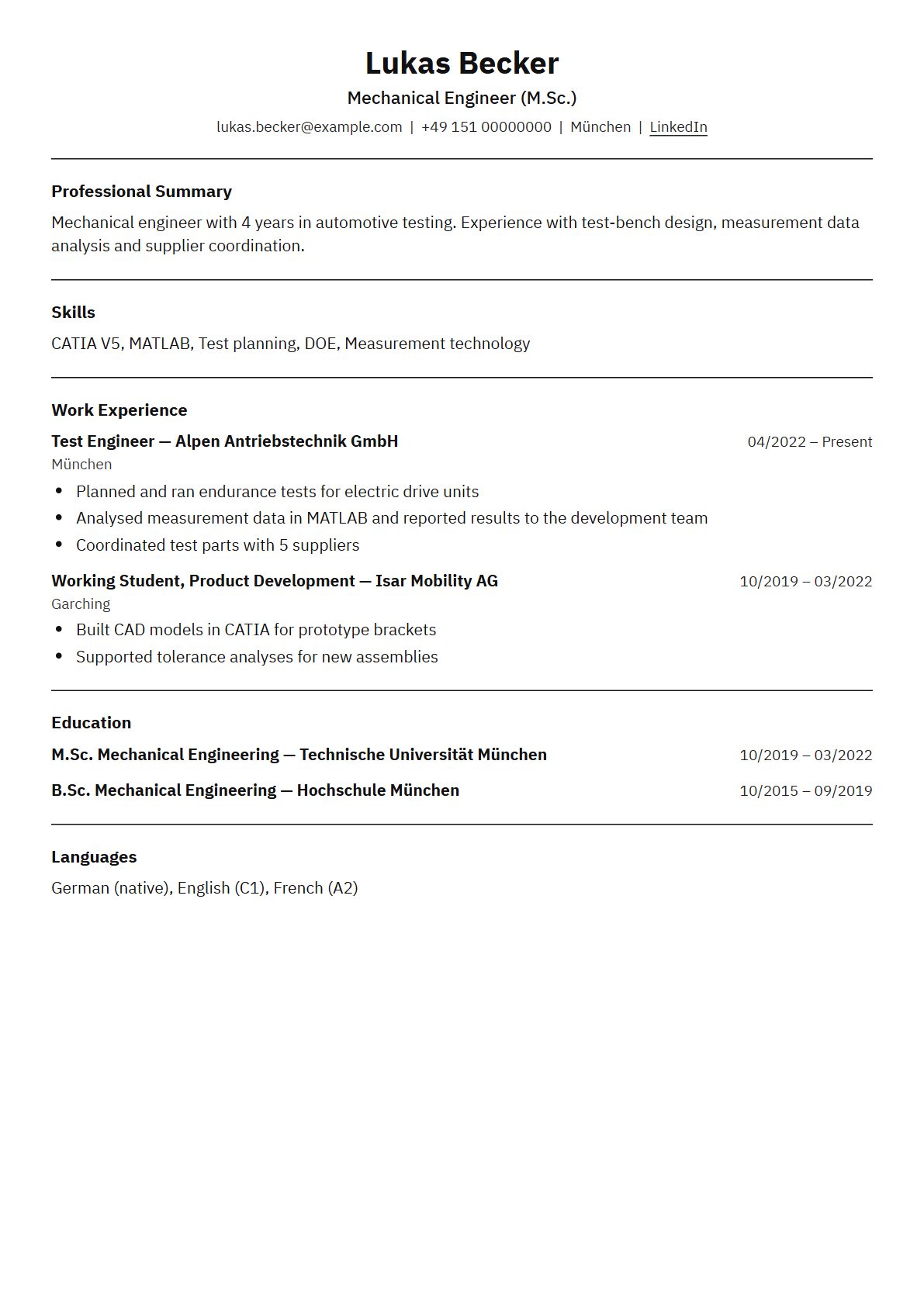
In Germany the CV is called a Lebenslauf. It is factual and well ordered, with exact months for every step, and it is usually sent with a cover letter and certificates.
At a glance
| What it is called | Lebenslauf |
|---|---|
| Length | 1–2 pages |
| Paper size | A4 |
| Photo | Optional. Still common, but not required |
| Personal details | Name, address or city, phone and email. Date of birth and nationality are optional. |
| Language | German for German-speaking roles; English for international ones |
Example
Make my CV for Germany
Free while Seerty is in beta.
Local tips
- Write exact dates as MM/YYYY for every job and course, newest first, and explain longer gaps.
- Employers often ask for certificates and references from past employers (Arbeitszeugnisse) as separate files.
- If you add a photo, use a professional one. Seerty lets you add one if you want.
- Give language levels on the European (CEFR) scale, for example “German B2, English C1”.
- Some people still sign and date the CV at the bottom. It is a tradition, not a requirement.
Is this format ATS-friendly?
Yes. Whatever the country, keep one column, real text and standard headings. Every CV made with Seerty is built this way, so you can follow local customs without confusing applicant tracking systems.
Customs change between employers and industries. When a job post asks for something specific, follow the job post.
Other countries
Europe Asia Middle East & North Africa Africa Latin America United States United Kingdom Canada Australia UAE Saudi Arabia Bahrain Qatar India Pakistan Philippines Egypt
Created by Seerty in Bahrain, for job seekers everywhere