Latin America CV format: example and tips
In Latin America the CV is usually called a currículum (Spanish) or currículo (Portuguese, in Brazil). One to two pages in the local language is normal, and a photo is still common in some countries but rarely required.
At a glance
| What it is called | Currículum / Currículo (CV) |
|---|---|
| Length | 1–2 pages |
| Paper size | A4 or Letter (Letter in Mexico) |
| Photo | Optional; still common in some countries |
| Personal details | Name, city, phone, email and LinkedIn. Many people still add their date of birth; it is optional. |
| Language | Spanish, or Portuguese in Brazil; English for international companies |
Country by country
| Country | Length | Photo | Good to know |
|---|---|---|---|
| Mexico | 1–2 pages | Optional | Letter paper is common |
| Brazil | 1–2 pages | Optional | A Portuguese CV; a short “Objetivo” line at the top is common |
| Colombia, Peru & Chile | 1–2 pages | Optional, still common | A Spanish CV; state your English level |
| Argentina | 1–2 pages | Optional | A Spanish CV; achievements before duties |
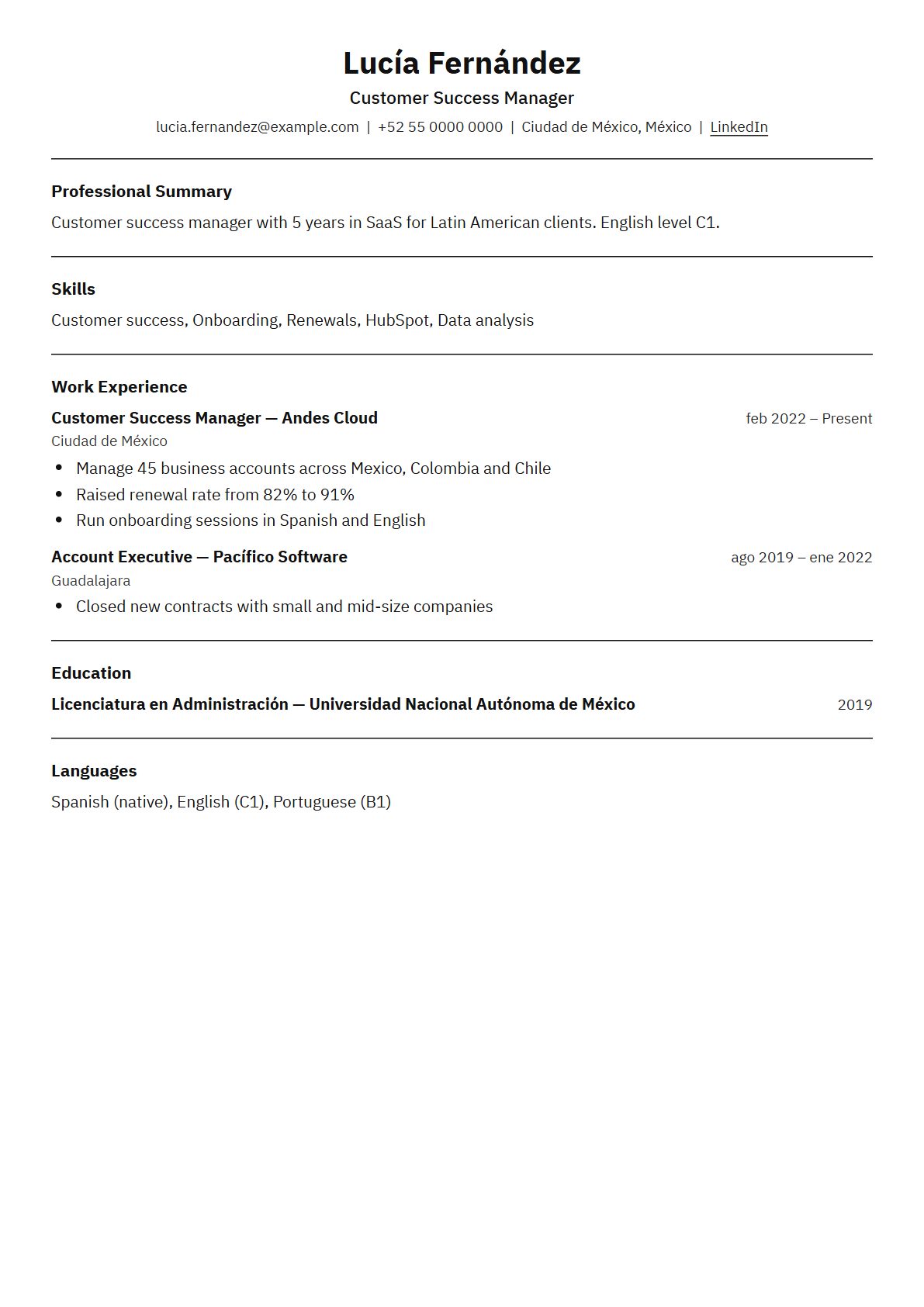
Example
Free while Seerty is in beta.
Local tips
- Write in the language of the job post, and keep an English version for multinationals.
- State your English level clearly (for example B2): it often matters a lot.
- Leave out ID numbers (such as CPF or CURP) until the employer asks.
- Keep one column and standard headings: large employers use applicant tracking systems.
Is this format ATS-friendly?
Yes. Whatever the country, keep one column, real text and standard headings. Every CV made with Seerty is built this way, so you can follow local customs without confusing applicant tracking systems.
Customs change between employers and industries. When a job post asks for something specific, follow the job post.
Other countries
Europe Asia Middle East & North Africa Africa United States United Kingdom Canada Australia Germany UAE Saudi Arabia Bahrain Qatar India Pakistan Philippines Egypt
Created by Seerty in Bahrain, for job seekers everywhere